
US Stock Market Wall Street cooled off from its record-setting streak on Thursday after fresh US inflation data showed wholesale prices climbing faster than expected in July. The hotter-than-anticipated figures prompted traders to rethink the likelihood of an imminent interest rate cut by the Federal Reserve, sparking a modest retreat across major indices.
US Stock Market Moves
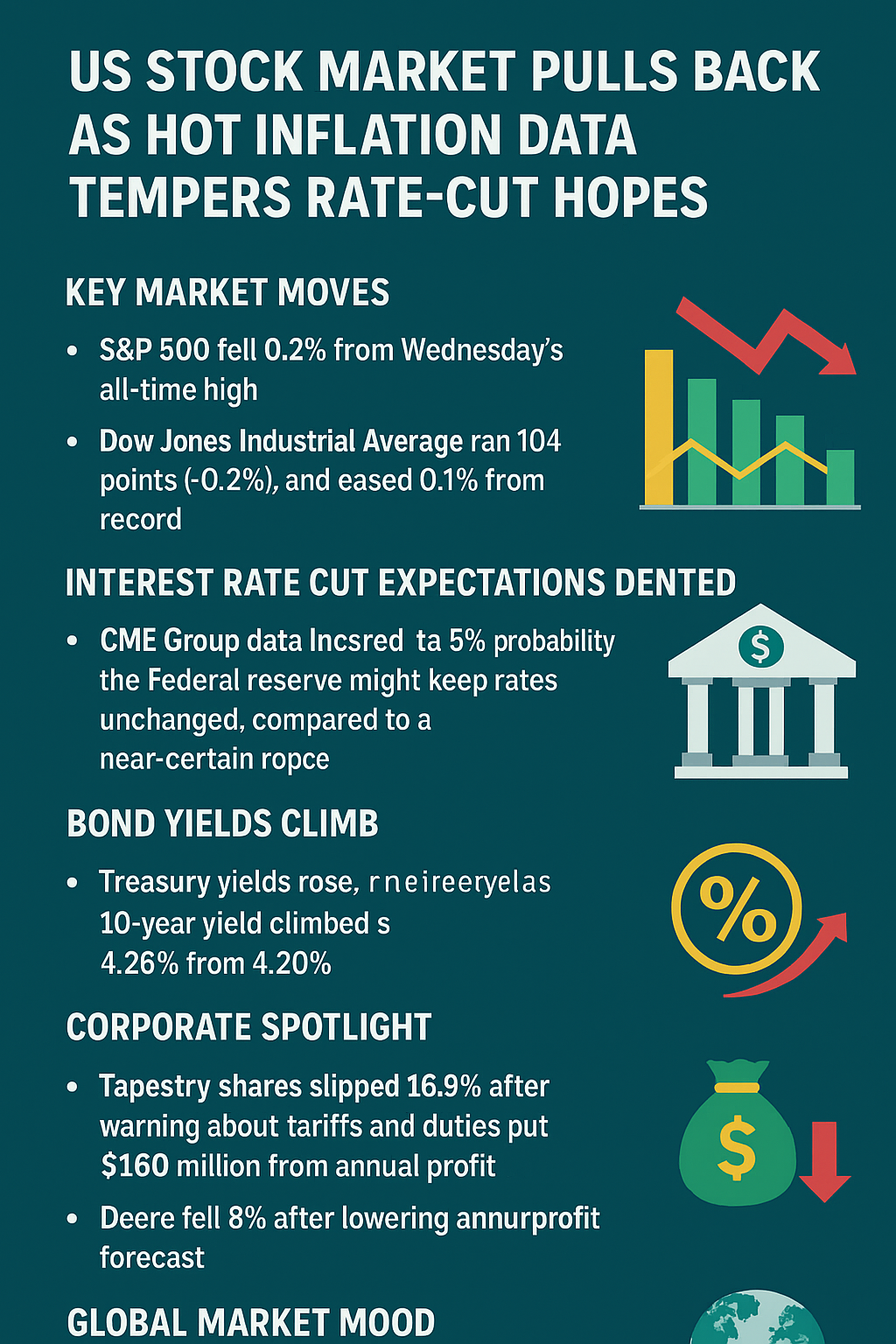
- S&P 500: Fell 0.2% from Wednesday’s all-time high.
- Dow Jones Industrial Average: Down 104 points (-0.2%).
- Nasdaq Composite: Eased 0.1% after hitting a record earlier this week.
US Stock Market shift came after the US Labor Department reported that the Producer Price Index (PPI) — a key measure of wholesale inflation — rose 3.3% year-on-year in July, far above economists’ forecast of 2.5%. This sharp increase suggests that higher costs for producers could eventually filter through to consumers, potentially slowing progress on bringing inflation back to the Fed’s 2% target.
Interest Rate Cut Expectations Dented
Just a day earlier, Wall Street was almost certain the Fed would deliver a rate cut in September. But after Thursday’s inflation surprise, CME Group data showed a 5% probability that the Fed might instead keep rates unchanged — a significant jump from near-zero odds previously.
Chris Larkin, Managing Director for Trading and Investing at E-Trade from Morgan Stanley, noted:
“This doesn’t slam the door on a September rate cut… but it may raise a bit of doubt.”
The news follows a more encouraging consumer price report earlier in the week, but the overall picture remains mixed. Strong labour market data — including lower-than-expected weekly jobless claims — suggests the economy is still running hot, giving the Fed less urgency to pivot toward looser monetary policy.
Bond Yields Climb
In reaction to the inflation data, Treasury yields rose as investors adjusted expectations for future borrowing costs:
- 10-year yield: up to 4.26% from 4.20%.
Higher yields often weigh on stocks, especially growth-oriented sectors, as they make borrowing more expensive and reduce the appeal of riskier assets.
Corporate Spotlight
It wasn’t just macroeconomic data moving markets — company-specific news also played a big role:
- Tapestry (Coach, Kate Spade): Shares plunged 16.9% after warning that tariffs and duties could cut $160 million from annual profit. While revenue guidance beat expectations, profit projections fell short.
- Deere & Co.: Dropped 8% after trimming the top end of its annual profit outlook, citing weaker customer sentiment amid economic uncertainty.
Global Market Mood
Overseas, Asian and European markets posted mixed performances ahead of Friday’s highly anticipated meeting between US President Donald Trump and Russian President Vladimir Putin. Investors remain watchful for any geopolitical developments that could impact global trade and commodity markets.
Bottom Line
The US stock market’s record-setting rally hit a speed bump as hotter-than-expected wholesale inflation data shook confidence in a swift Fed rate cut. With bond yields rising, corporate earnings sending mixed signals, and global political meetings looming, the next few weeks could prove pivotal for market direction.
US Stock Market FAQ
1. Why did the US Stock Market fall today?
The US Stock Market dipped after US wholesale inflation data for July came in hotter than expected, rising 3.3% year-on-year. This raised doubts about a September interest rate cut by the Federal Reserve.
2. What is wholesale inflation, and why does it matter?
Wholesale inflation, measured by the Producer Price Index (PPI), tracks the prices producers receive for goods and services. Higher wholesale inflation can lead to higher consumer prices, impacting interest rate decisions and overall economic growth.
3. How did major US indices perform?
The S&P 500 fell 0.2%, the Dow Jones Industrial Average dropped 104 points (-0.2%), and the Nasdaq eased 0.1% from record highs.
4. How did the inflation report affect interest rate expectations?
Before the report, markets were almost certain of a September rate cut. After the data, CME Group showed a 5% probability the Fed may keep rates unchanged.
5. Why did bond yields rise?
Bond yields climbed because investors expect the Fed might delay cutting rates, making existing bonds less attractive. The 10-year yield rose from 4.20% to 4.26%.
6. Which companies saw the biggest declines?
Tapestry dropped 16.9% after profit warnings tied to tariffs and duties, while Deere fell 8% after lowering its annual profit forecast.
7. How does the labor market affect interest rate policy?
A strong labor market — with low jobless claims and steady hiring — suggests the economy can handle higher interest rates, giving the Fed less reason to cut rates quickly.
8. What should investors watch for next?
Key factors include upcoming inflation data, Federal Reserve policy statements, and global geopolitical events, including the planned meeting between US and Russian leaders.